Ginko, a digital wellness app
Crafting an Investor-Ready MVP
This content requires a password to view
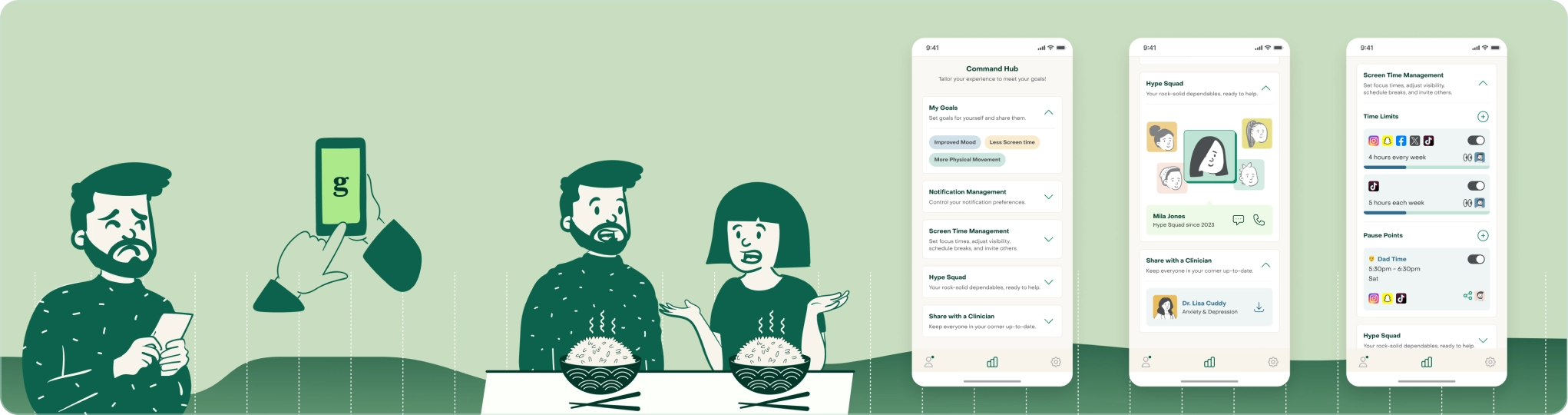
Ginko is an early-stage digital wellness product designed to help parents and kids build healthier relationships with screen time. While many existing tools focus on restriction and monitoring, Ginko takes an educational, collaborative approach that supports self-regulation and open communication.
In a five-week sprint, I partnered with a design lead and worked closely with the founders to shape an investor-ready MVP story. Rather than building a full prototype, we made a deliberate tradeoff to focus on a small number of high-impact moments—optimizing for clarity and belief in investor conversations over product completeness.
Through a discovery workshop, persona development, and focused feature definition, we narrowed the MVP to a small set of features that clearly showed the product’s value and how it differed from competitors. The result was a clear, compelling narrative that helped elevate the perceived maturity of the product and position Ginko for early fundraising.
"Seriously you guys, you nailed this. I'm so excited!!! We're 10 years beyond where we started. BRAVA!!"
–Founder, Ginko
Ginko is an early-stage digital wellness product focused on helping parents and kids build healthier relationships with screen time. While awareness of screen time’s impact on mental health is high, most existing tools rely on restriction—often increasing friction rather than trust.
The founding team needed an MVP story to support early fundraising. With a tight five-week timeline, the challenge was to clearly communicate the product’s value, differentiation, and long-term potential without overbuilding or locking into premature decisions.
Approach
I partnered with a design lead and worked closely with Ginko’s founders across product strategy, experience design, and visual storytelling.
We began with a one-day, in-person discovery workshop that I helped shape and facilitate alongside the design lead, aligning the founders on scope, priorities, and what the MVP needed to prove in investor conversations.
Key decisions included:
Identifying the moments most critical for telling a clear, compelling product story
Making a deliberate tradeoff to use high-fidelity storyboards instead of a full prototype
Prioritizing narrative clarity and speed over feature completeness
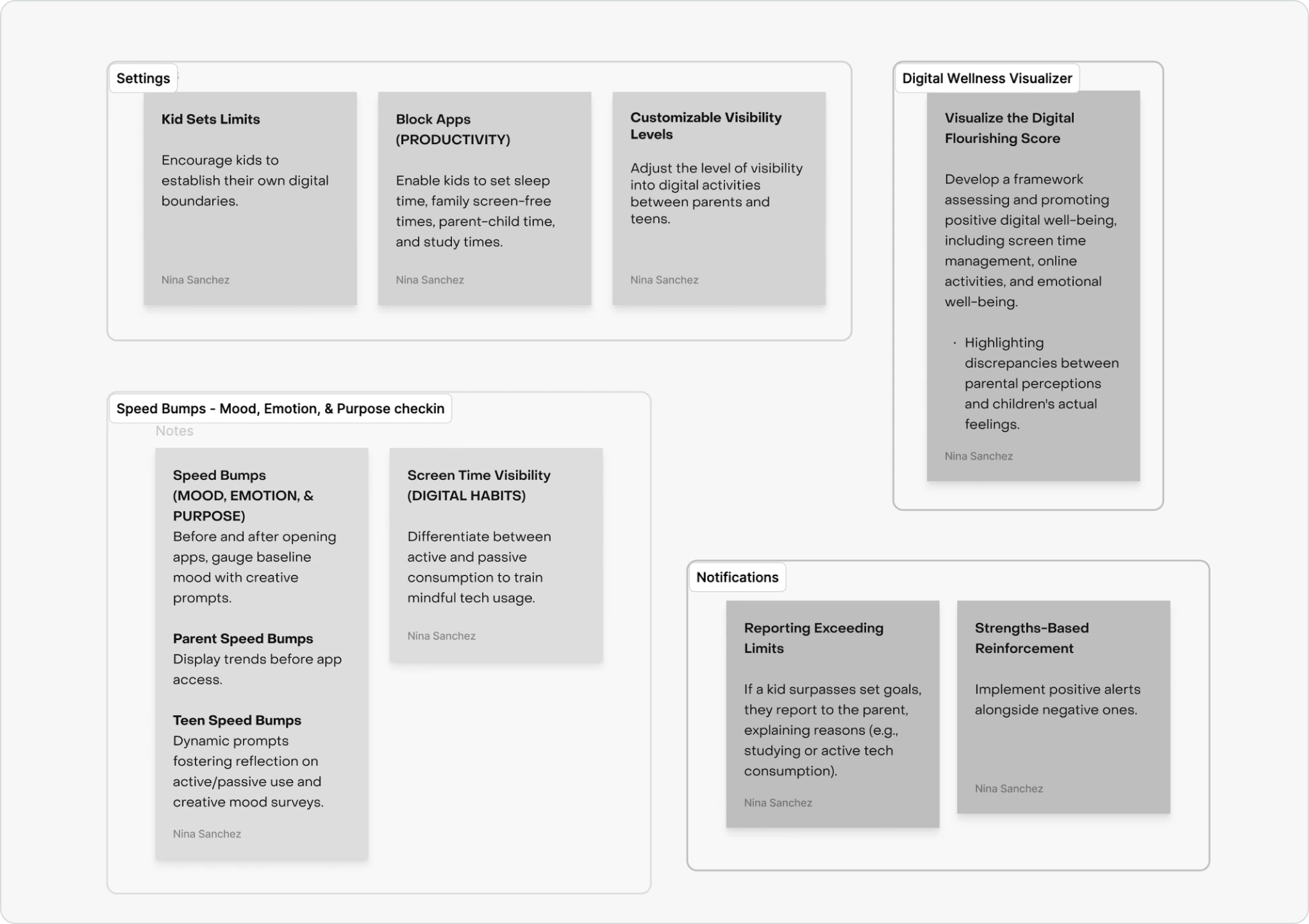
We narrowed the MVP to a small set of features that clearly showed the product’s value and how it differed from competitors.
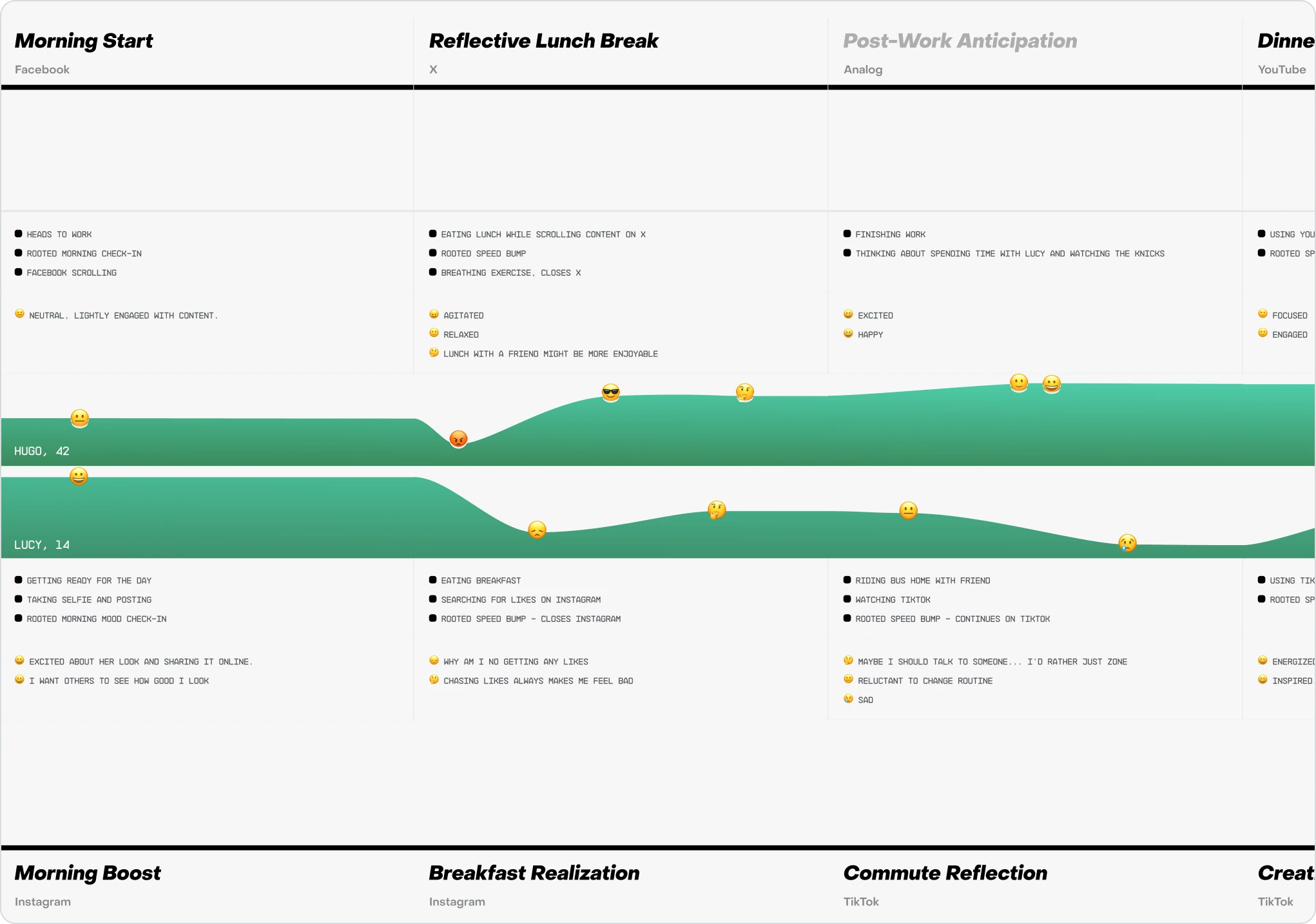
To ground the work in real family dynamics, we created two personas—a parent and a teen—and designed parallel user journeys. From this, we focused on four core features:
Settings
Speed Bumps
Digital Wellness Visualizer
Notifications
Each feature emphasized education, self-regulation, and shared understanding over surveillance or control.
Outcome
The final deliverables gave the founding team a clear, investor-ready narrative they could consistently use across pitch conversations—helping elevate the perceived maturity of the product without overcommitting to build decisions.
The work received strong founder feedback and positioned Ginko for its next stage of fundraising and product development.
"Seriously you guys, you nailed this. I'm so excited!!! We're 10 years beyond where we started. BRAVA!!"
–Founder, Ginko
Ginko is an early-stage digital wellness product designed to help parents and kids build healthier relationships with screen time. While awareness of screen time’s impact on mental health is high, most existing tools emphasize restriction and monitoring—often creating tension rather than trust within families.
The founders needed an MVP story that could support early fundraising. With only five weeks, the work required strong prioritization, clear tradeoffs, and a focus on communicating belief in the product—not exhaustive functionality.
Problem
Parents and kids know screen time affects mental health, but they lack tools that support education, self-regulation, and open communication.
Most existing solutions focus on control:
Hard limits instead of shared understanding
Monitoring instead of self-awareness
Enforcement instead of behavior change
How might we design features that encourage healthier screen habits while supporting trust between parents and kids?
Goals
At this stage, success wasn’t about feature completeness—it was about helping investors quickly understand what this product is, who it’s for, and why it’s meaningfully different.
Our goals were to:
Define a focused MVP aligned to fundraising needs
Clearly articulate Ginko’s value and philosophy
Differentiate the product from traditional parental control tools
Create a narrative the founders could confidently repeat
Discovery & Alignment
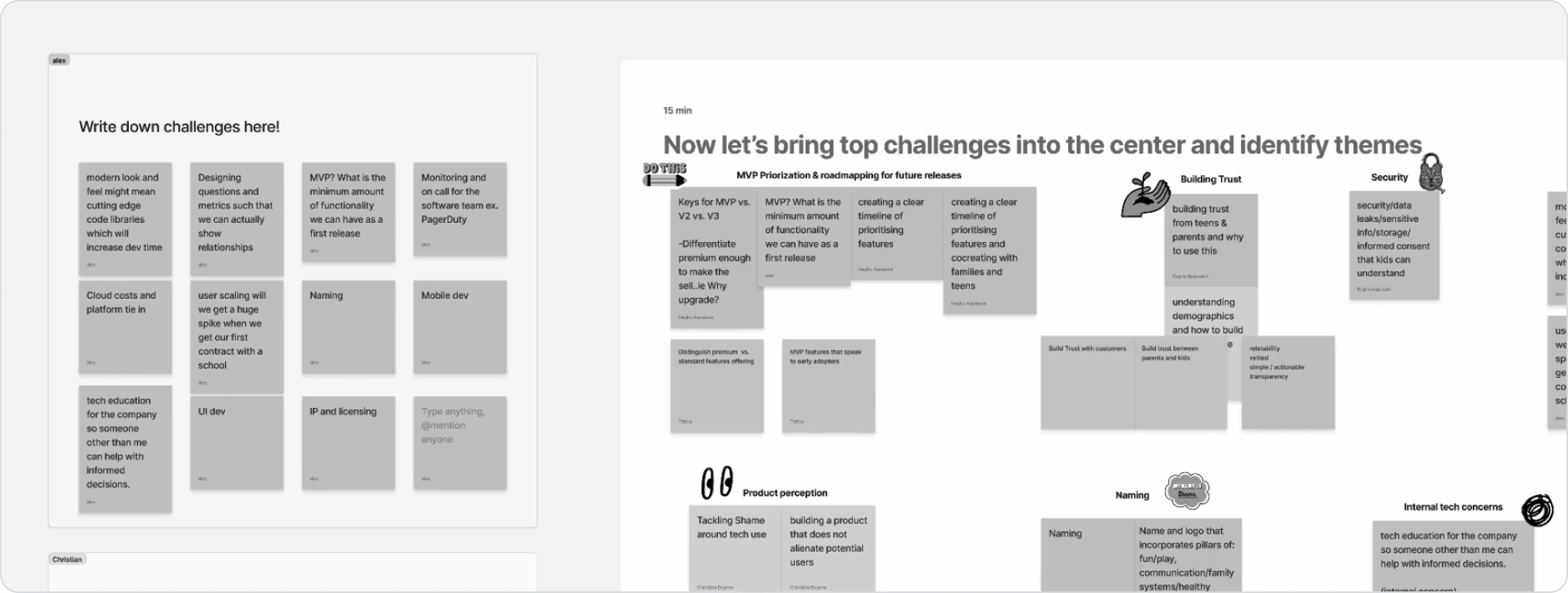
We began with a one-day, in-person discovery workshop that I helped shape and facilitate alongside the design lead. Together with the founders, we:
Aligned on product vision and success criteria
Identified key parent and child pain points
Reviewed the competitive landscape and gaps
Agreed on which moments mattered most in investor conversations
This alignment allowed us to narrow scope early and move quickly with confidence.
Defining the MVP
Rather than designing a full end-to-end product, we made a deliberate tradeoff to focus on storytelling through a small number of high-impact moments—optimizing for clarity and belief over completeness.
We narrowed the MVP to a small set of features that clearly showed the product’s value and how it differed from competitors. This approach helped us:
Stay within the five-week timeline
Avoid overcommitting to unvalidated build decisions
Keep the narrative focused and credible
Competitive Analysis
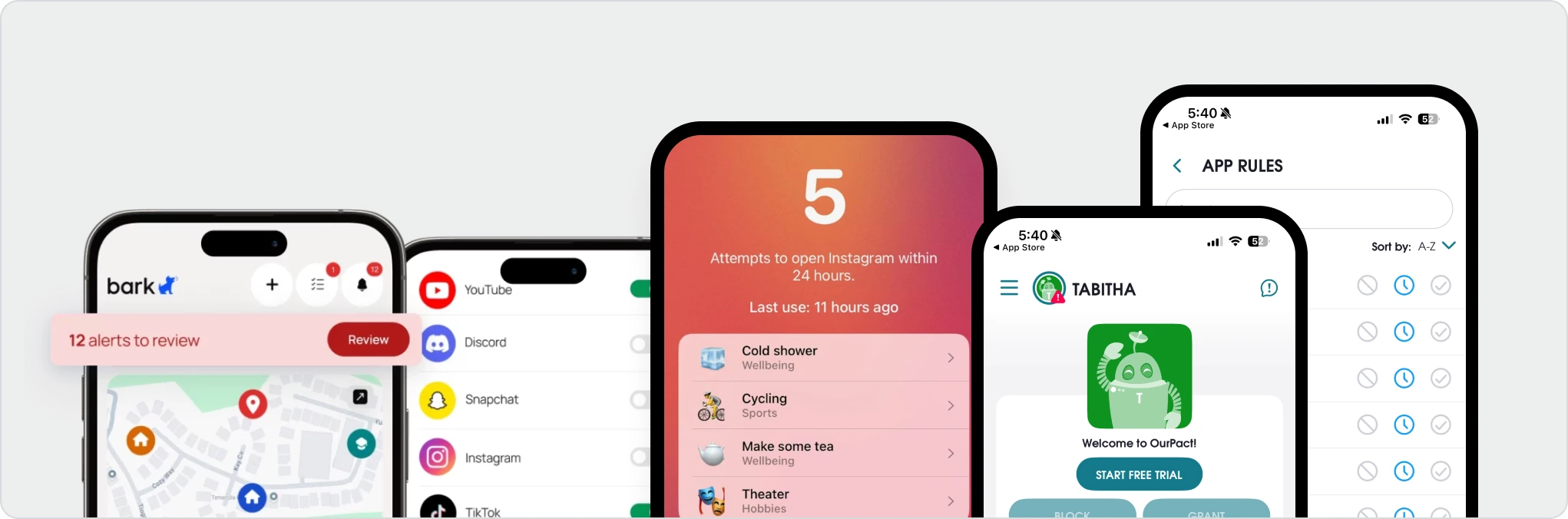
We reviewed existing digital wellness and parental control tools to understand how the market currently addresses screen time, mental health, and family dynamics.
Bark - surveillance-driven: Monitoring-first, parent-controlled.
OurPact - control-driven: Blocking and enforcement over collaboration.
One Sec - interruption-driven: Habit disruption without deeper context.
Ginko intentionally took a different stance—emphasizing education, self-awareness, and communication over restriction or control.
Personas & User Journeys
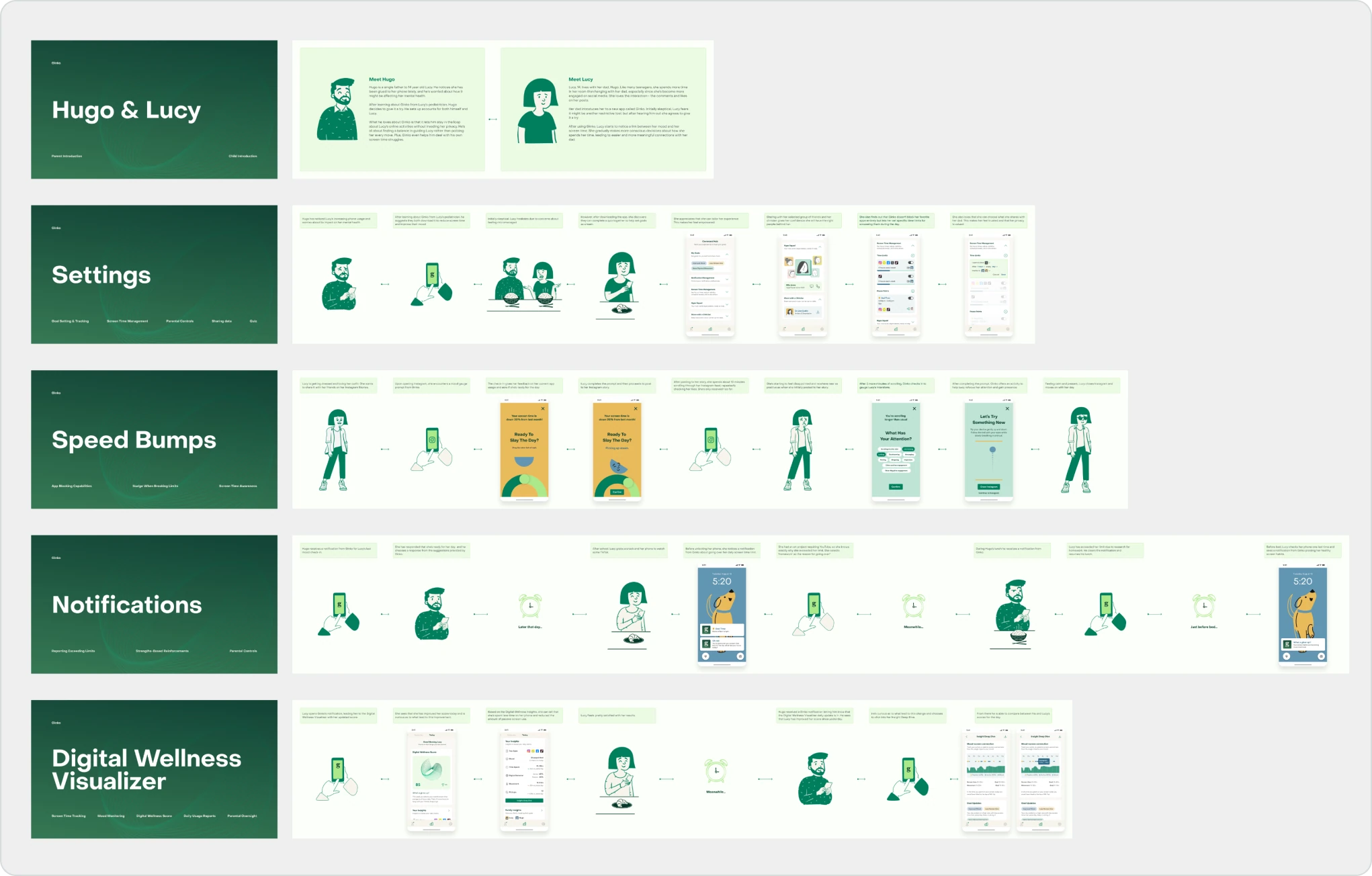
To reflect real family dynamics, we created two personas:
Hugo (42) — a parent trying to support healthier habits without damaging trust
Lucy (14) — a teen navigating autonomy, self-awareness, and screen use
Designing parallel journeys allowed us to understand not only individual experiences, but how the app mediated communication between parents and kids—central to Ginko’s philosophy.

Key Features & Storyboards
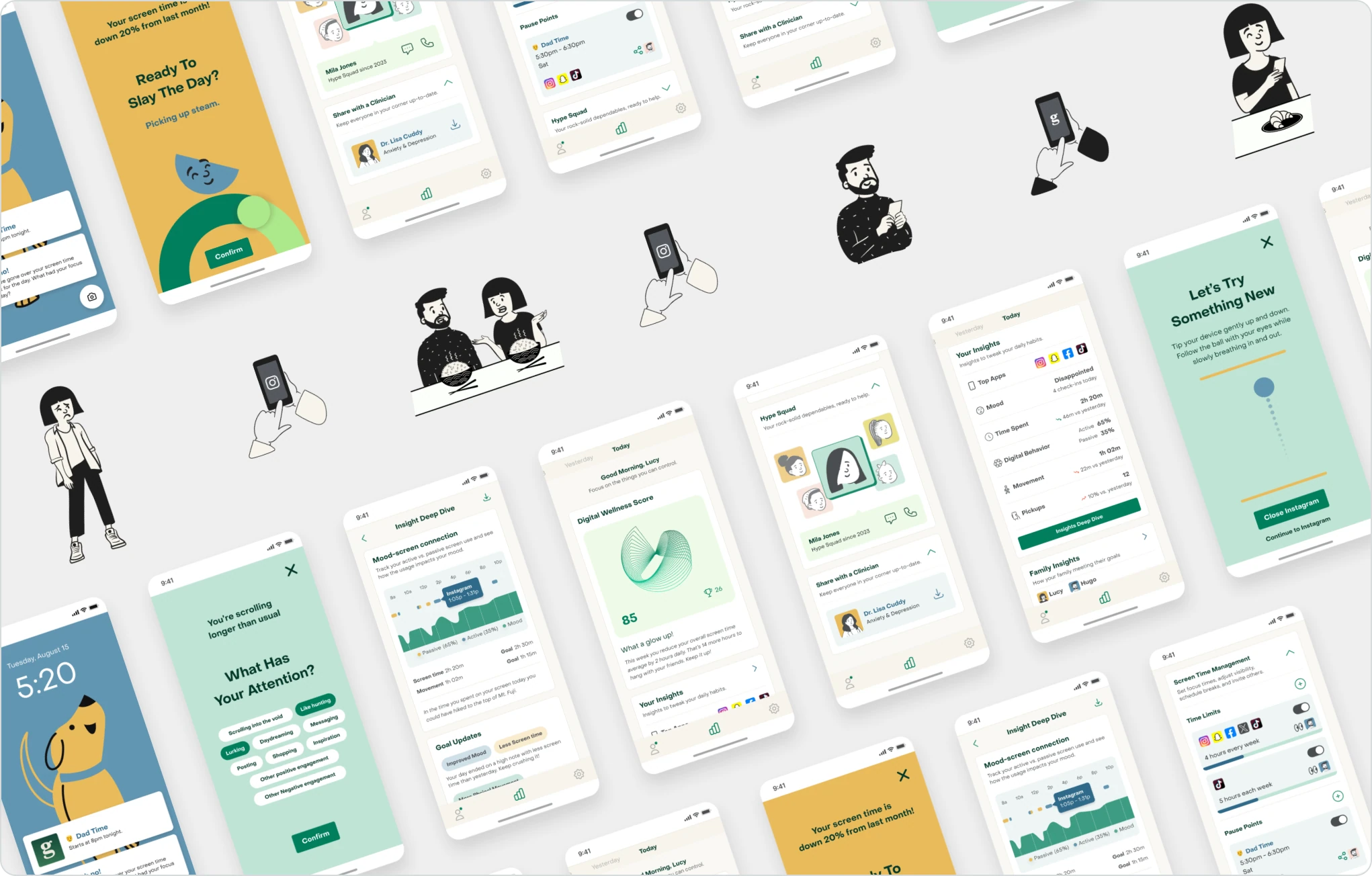
Instead of building a functional prototype, we created four high-fidelity storyboards that illustrated the most important moments in the experience:
Settings — establishing shared expectations
Speed Bumps — intentional pauses for reflection
Digital Wellness Visualizer — surfacing patterns and impact
Notifications — reinforcing awareness without shame
These storyboards combined wireframes and visual design to clearly communicate how the product works and why it’s different.
Outcome
The final deliverables gave the founding team a clear, investor-ready MVP narrative they could use consistently across pitch conversations. The work helped elevate the perceived maturity of the product while leaving room for future iteration and validation.
Learnings
High-fidelity storyboards can be more effective than full prototypes when the goal is alignment and belief—not usability validation
A small number of well-chosen moments can communicate product value more clearly than a complete build
Early alignment on what an MVP needs to prove reduces downstream churn
Challenges
Big vision within a tight five-week timeline
Navigating an evolving brand identity while keeping design focused
Designing interconnected parent and child experiences
Wins
Supported a strong discovery kickoff that aligned founders early
Delivered polished, investor-ready visuals
Crafted a product story rooted in empathy, education, and behavior change
What I’d Do Next
With more time, I’d pressure-test the MVP narrative with early investors or advisors, then refine which signals most strongly communicate trust, differentiation, and long-term potential.
"Seriously you guys, you nailed this. I'm so excited!!! We're 10 years beyond where we started. BRAVA!!"
–Founder, Ginko