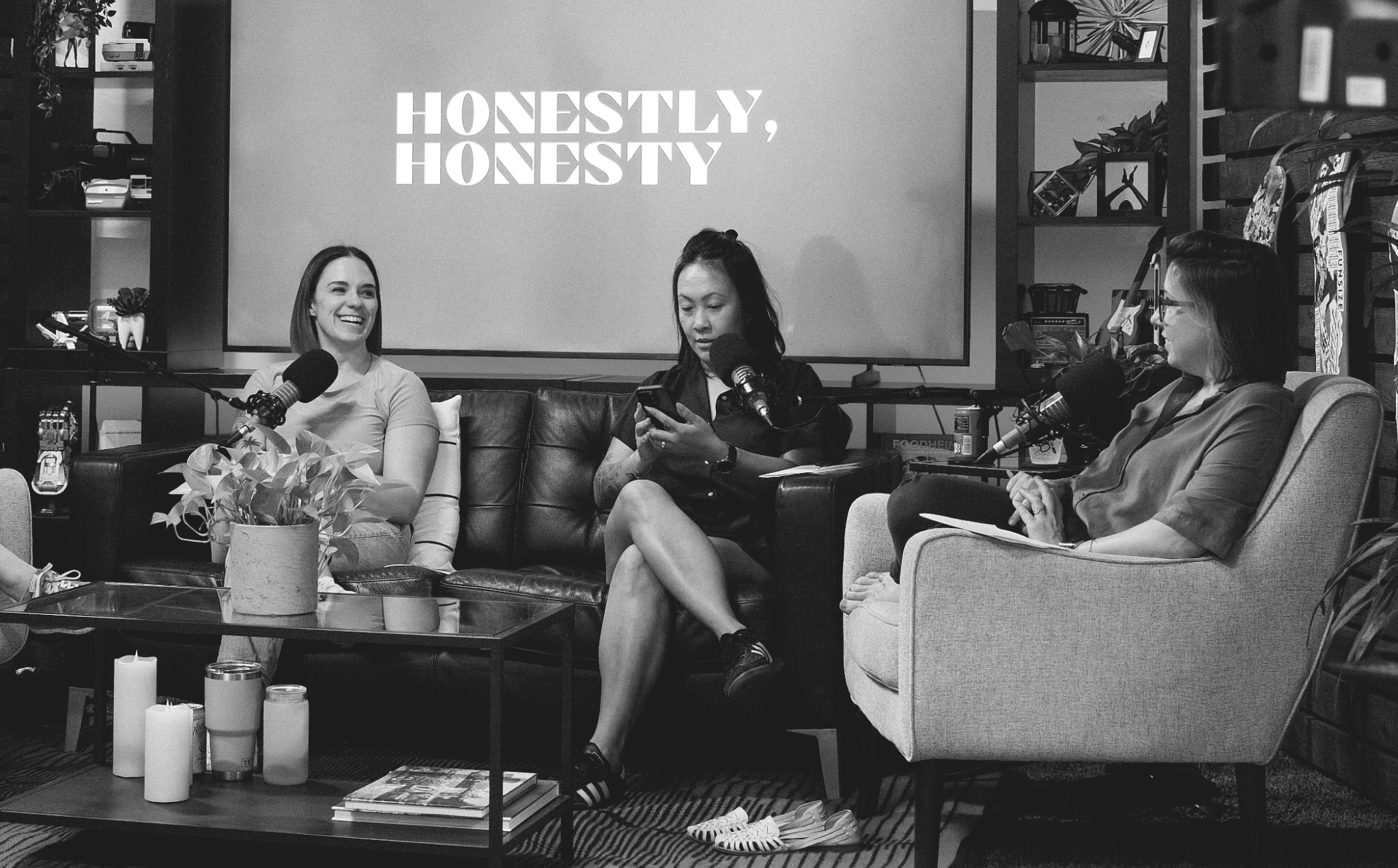
Honestly, Honesty — Podcast Design
Crafting a clear voice and structured format for candid creative conversations
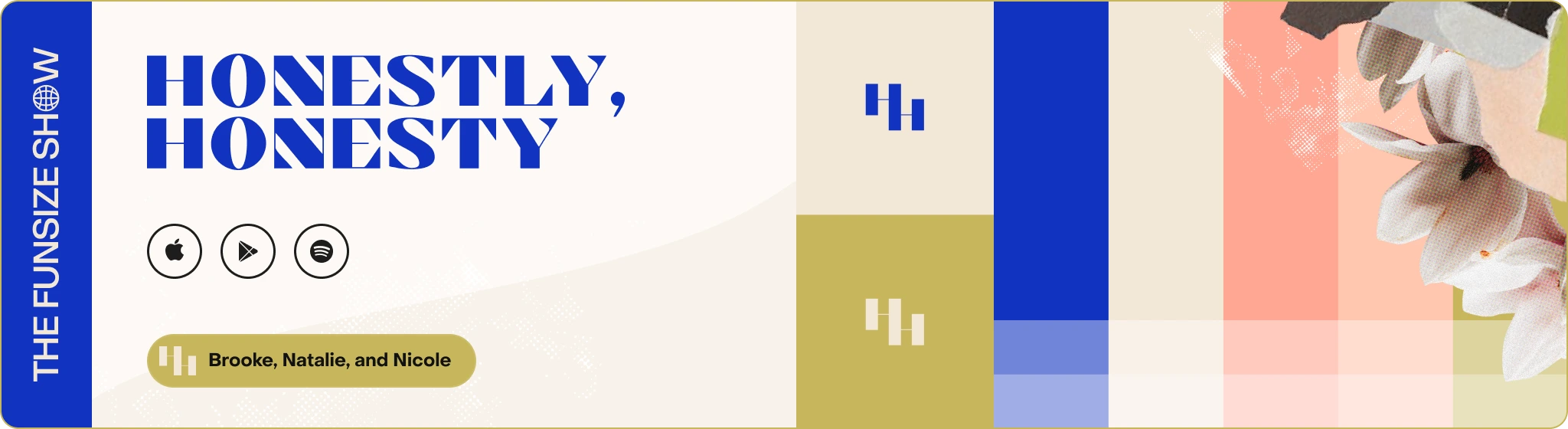
This content requires a password to view
Honestly, Honesty is a female-led podcast created to explore creativity through candid, unfiltered conversation. The opportunity began with a simple question: what if we created a space for honest conversations about creativity that centered the human experience—not just the work?
I co-created and helped launch the show end-to-end—shaping the concept, tone, format, and brand. From defining the editorial point of view to co-leading brand exploration and shipping the first episodes, this project applied design thinking to narrative, voice, and platform-building rather than traditional product development.
The result is a growing creative platform with a clear identity: conversational, grounded, and authentic. It demonstrates leadership through storytelling, influence without authority, and the ability to bring an idea from concept to a living, evolving product in the world.
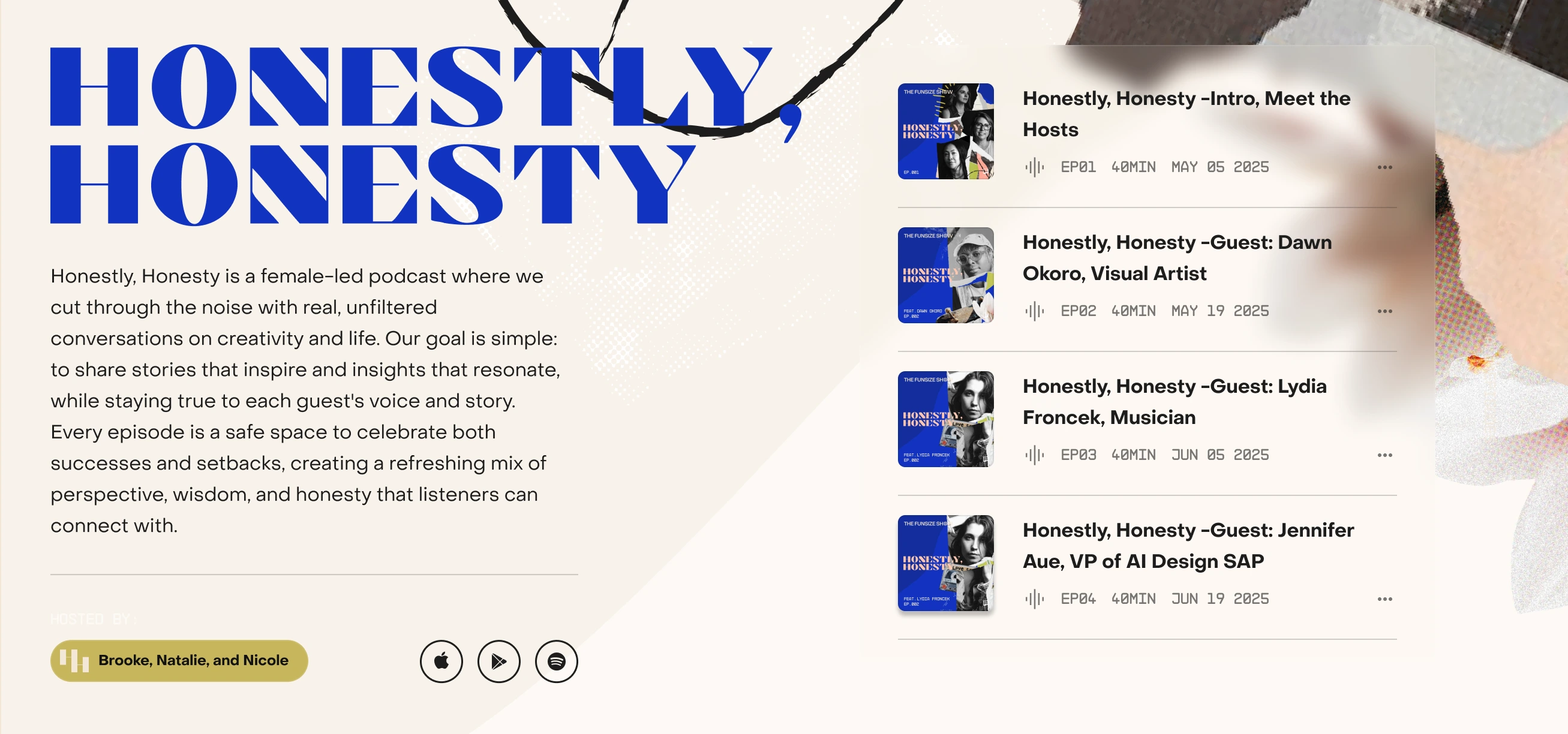
Honestly, Honesty began with a simple question:
What if we created a female-led space for honest conversations about creativity—centered on the human experience, not just the work?
Many creative interviews focus on titles and outcomes. We wanted to design conversations that explored identity, doubt, growth, joy, and the realities behind the work.
Because this was an extension of an existing show, the challenge wasn't just conceptual. We needed to define:
A distinct editorial point of view
A repeatable conversational format
A visual identity that felt expressive but ecosystem-aligned
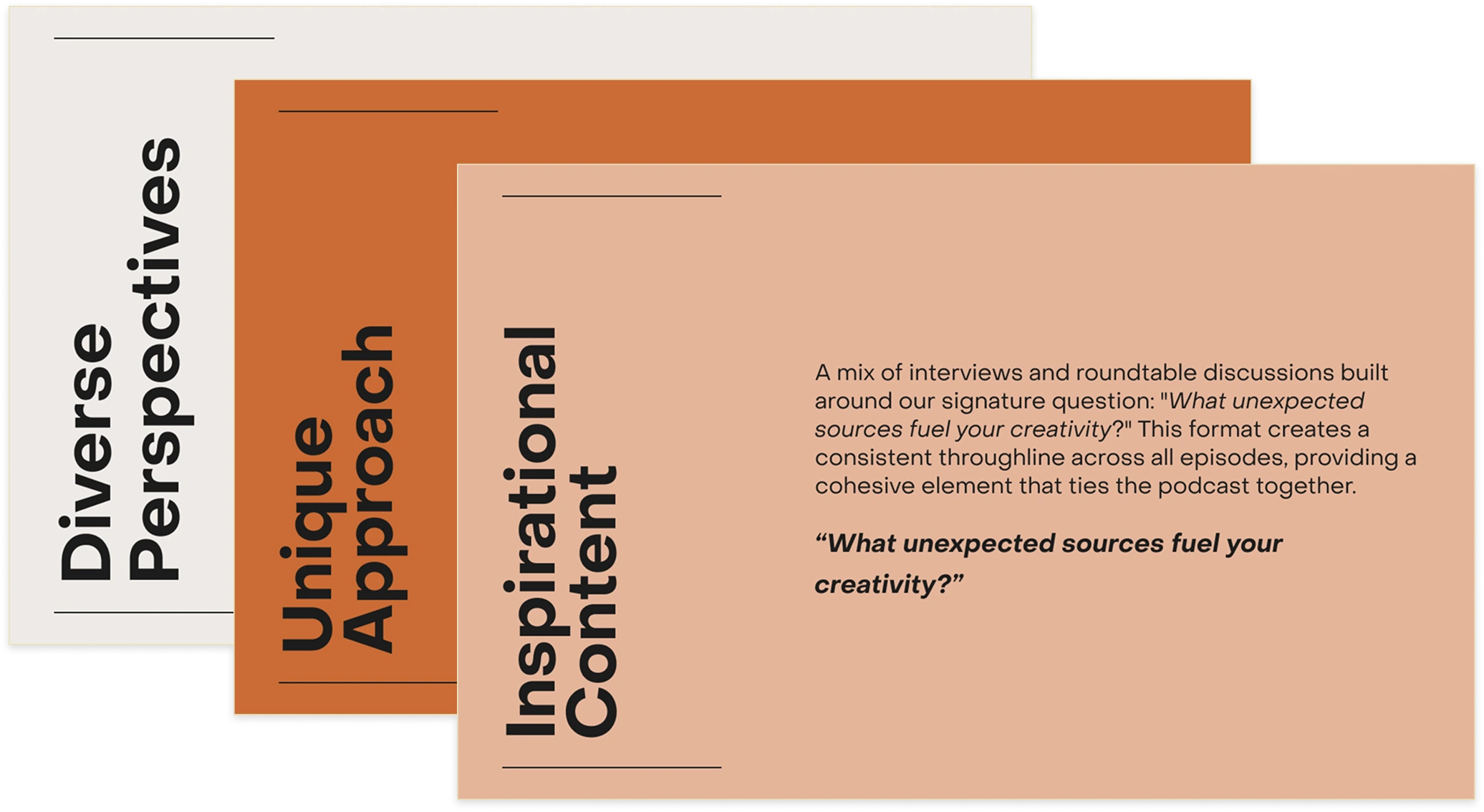
Approach
We treated the segment as a system.
I partnered with my co-hosts to:
Clarify the thesis and audience
Establish tone principles (candid, grounded, human)
Design a prompt-based conversational format
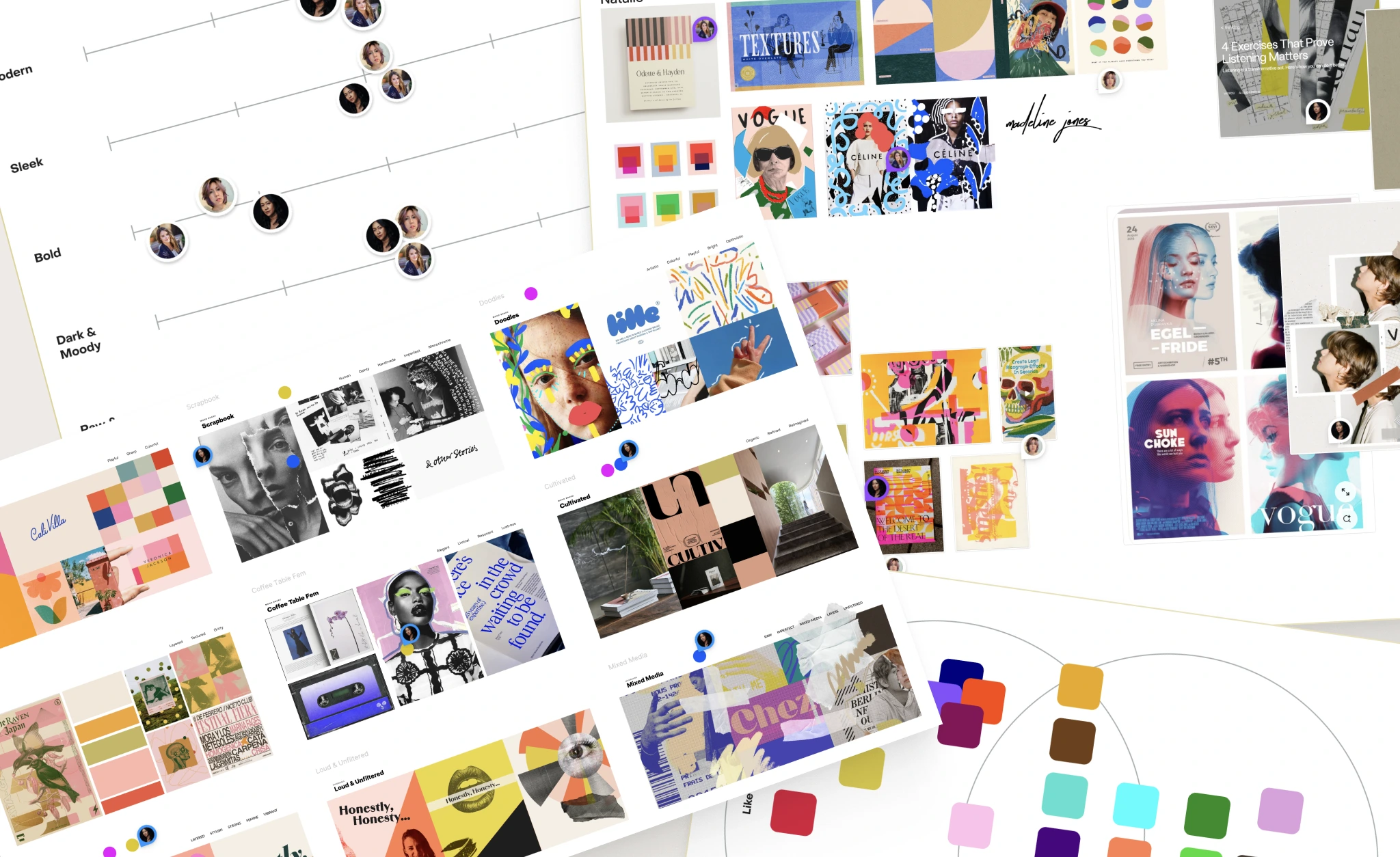
Co-lead a collaborative brand exploration
Rather than overproducing, we optimized for psychological safety and trust. Episodes are 30–45 minutes, structured enough to provide clarity but open enough to feel natural.
We translated the editorial direction into a visual identity that felt approachable and expressive—distinct, but aligned with the broader Funsize ecosystem.
Outcome
Honestly, Honesty launched as a recurring segment with a defined voice, consistent structure, and cohesive brand direction.
The work demonstrates how design thinking can extend beyond product—shaping clarity, tone, and connection within an evolving platform.
Honestly, Honesty began with a simple question
Most creative interviews focus on titles, outputs, and polished success stories. We wanted to design conversations that explored identity, doubt, growth, joy, and the messy in-between.
Because this was an extension of an existing show, the challenge wasn’t just conceptual. It required defining:A distinct editorial point of view
A repeatable conversational format
A visual identity that felt expressive but ecosystem-aligned
Designing the Show Concept
Before brand, we focused on structure.
We treated the segment as a system:
Defined the core thesis and purpose
Clarified who the conversations were for
Established tone principles (candid, grounded, human)
Designed a format based on prompts instead of interviews
Set guardrails to protect authenticity and trust
Episodes were intentionally audio-first and 30–45 minutes—long enough for depth, short enough to stay accessible.
The goal wasn't production polish. It was psychological safety and honesty.
Brand Exploration & Visual Direction
We treated Honestly, Honesty as both a content and brand design problem.
From an editorial standpoint, we defined a point of view rooted in honesty, warmth, and ease—conversations that felt like real life, not performance. That same thinking guided the brand work.
I co-led a collaborative brand exploration focused on:
Defining brand characteristics and emotional tone
Exploring color direction, visual energy, and texture
Experimenting with palettes, logo treatments, and image styles
Creating and sharing mood boards and lightning demos
Each host explored visual directions independently before we came together to critique, compare, and converge. This process helped surface what felt authentic—and what felt forced—before committing to a final direction.
Rather than aiming for high-gloss polish, we chose a visual identity that felt approachable, expressive, and human, matching the tone of the conversations themselves.
Brand Execution
From that exploration, we landed on a direction that felt honest and distinctly "us."
I helped translate the brand into:
Podcast cover art and show visuals
YouTube thumbnails and social-ready assets
A consistent visual language that could evolve over time
The goal was not a rigid brand system, but a flexible one—something that could grow with the conversations and the people behind them.

Episodes to Date
To date, we've produced and released four complete episodes, establishing the tone and intent of the segment:
Episode 1 — Meet the Hosts
Setting the tone, intention, and purpose of the segment
Episode 2 — Dawn Okoro, Visual Artist
On identity, expression, and risk
Episode 3 — Lydia Froncek, Musician
On improvisation, self-trust, and joy
Episode 4 — Jennifer Aue, VP of AI Design at SAP
On leadership, purpose, and humanizing technology
These episodes helped validate the format and reinforced the value of creating space for more reflective, human-centered conversations.
Outcome
Honestly, Honesty launched as a recurring segment with:
A defined editorial voice
A repeatable conversational structure
A cohesive visual identity
A growing audience
This work demonstrates how brand design, editorial thinking, and facilitation can work together—using design to shape tone, trust, and connection rather than just artifacts.
Reflection
This project reinforced that brand design isn't just about aesthetics. It's about aligning voice, visuals, and intent so people immediately understand how something is meant to feel—and feel invited into it.